My Feet Buckled On The Escalator —
Then My Husband Found A Strange "Bubble Gel" Routine
I felt the steel escalator step slide away beneath me before I even understood what was
happening.
For one terrifying, stretched-out second, I was tipping backward with my four-year-old
granddaughter’s hand in mine.
The burning numbness in my feet had finally caused my legs to give out. It was the wake-up
call I could no longer ignore.
It started halfway up the ride. My foot had gone completely numb—that thick,
walking-through-cotton feeling—and then came the white-hot stab through my arch, like I’d
planted my bare heel on a hot coil. My knee simply folded.
“Grandma!” Sofia squealed from the step below, half-laughing, thinking it was a game.
But it was not a game. As I fell back toward the steel comb of steps rising behind me, a man
two steps up caught my elbow. A woman grabbed Sofia under the arms. The whole escalator went
quiet the way a room goes quiet when everyone sees the same thing at once.
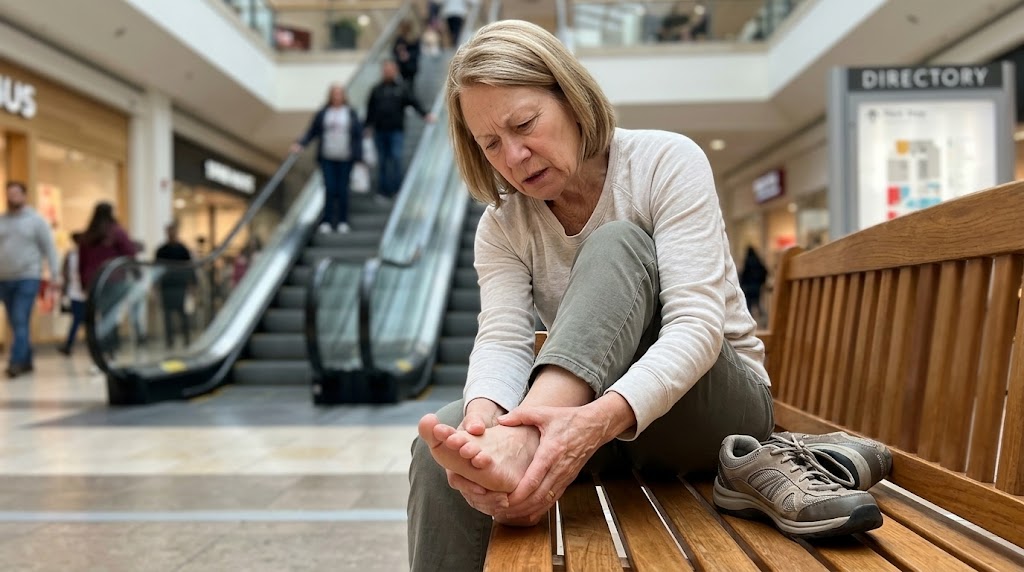
At the top, I sat on a bench shaking so hard I couldn’t get my words out.
“I’m alright,” I whispered. “Just my feet. They gave out.”
But everyone knew it wasn’t alright. This was the third time in two months my feet had
buckled without warning. And this time, a stranger’s reflex was the only thing between Sofia
and a fall.
My name is Elena. I’m 61. And that afternoon was the moment I finally understood what years
of burning, tingling feet had been quietly taking from me.
It Doesn't Just Hurt. It Steals
Things.
That one second. That’s all that stood between my granddaughter and the steps — because her
grandmother couldn’t trust her own two feet.
My husband Theo didn’t say much on the drive home. He just kept glancing over, both hands
tight on the wheel. At a red light he finally said it: “Elena, we can’t keep pretending this
is normal.”
He was right. I’d been pretending for years.
Theo and I had built a beautiful life. Thirty-four years of marriage. Two daughters. Three
grandkids. A garden I pottered in every evening. Long walks down to the water after dinner.
Then the burning started. A faint tingle in my toes at night. Then a deep, prickling heat
across both soles. Then the electric jolts at two and three in the morning that ripped me
out of sleep.
The Little Humiliations Nobody Warns
You About
It wasn’t just the escalator. It was sitting on the edge of the bed every morning for twenty
minutes, dreading the first step before I dared to stand. It was gripping the kitchen
counter, shifting foot to foot, just to finish making dinner. Some mornings, pulling on a
pair of socks made my toes buzz like a live wire.
I stopped kneeling in the garden. I stopped the evening walks with Theo. I stopped dancing in
the kitchen. I started planning my whole day around how far I’d have to walk and where I
could sit down.
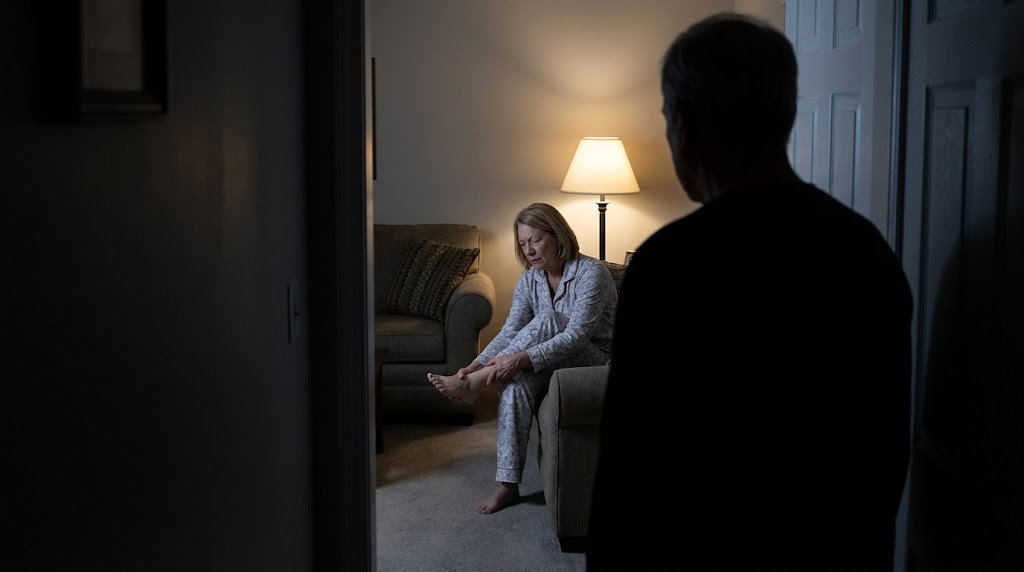
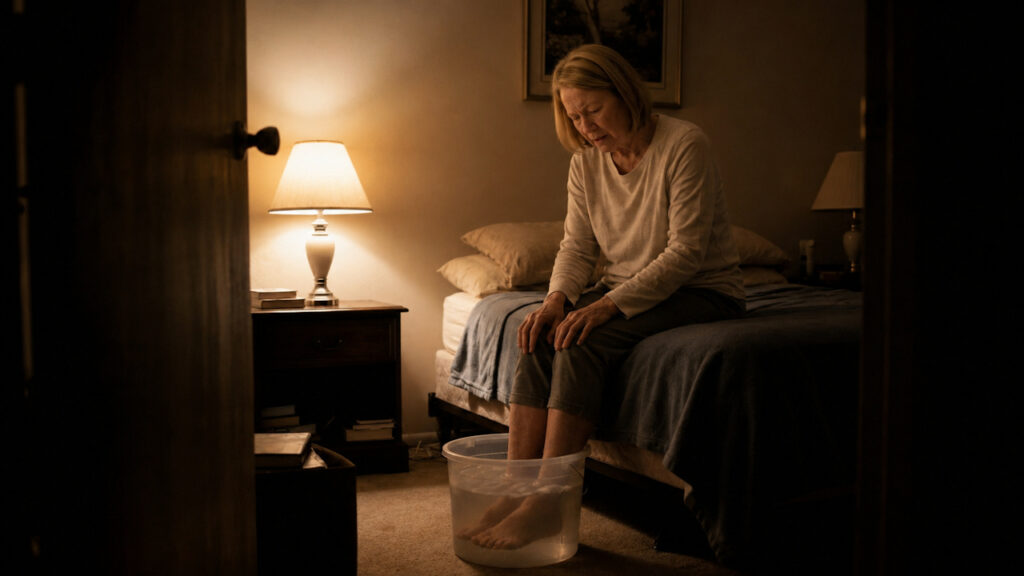
The nights were the worst. Socks, no socks, fans, a bag of frozen peas pressed against my
soles — nothing held for long. Some nights I gave up and sat in the living room chair until
sunrise just to keep my feet off the sheets. Thirty-four years of marriage, and there I was,
awake alone at 3 a.m. while Theo slept upstairs. I had never felt so helpless.
The Words That Stopped Me Cold
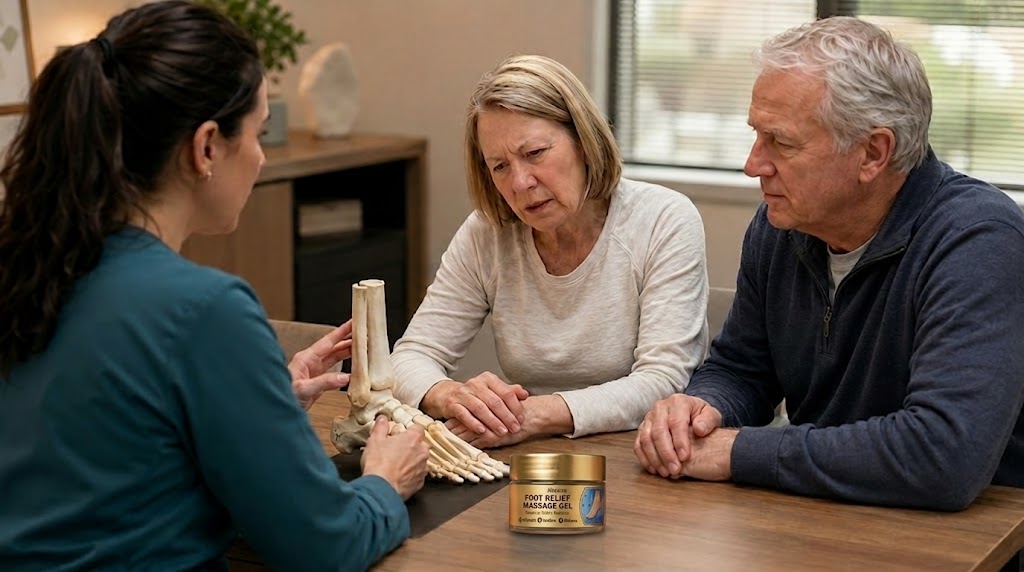
The week after the escalator, Theo took me to see an independent foot-care specialist. There
were balance checks, pressure checks, questions about my sleep and where the burning usually
started. Then she sat us down and explained it in a way I could finally understand.
My feet weren’t simply “getting older.” The discomfort running through my soles and calves
had become deeply rooted – triggering heat and tingling sensations even when I was
completely off my feet.
She said something that stayed with me: “Your feet have developed a cycle of overreacting to
daily strain. They ache and sound the alarm even when there’s no obvious trigger.”
That one sentence explained my entire life. I wasn’t just uncomfortable anymore. I was living
around fear — fear of standing, of walking, of holding my own grandchild.
Then she added the part nobody had ever explained to me. Gently, she said that a lot of what
people reach for works right at the surface of the skin — while the part causing the trouble
sits deeper, a good centimetre or more below, where that deep, stubborn discomfort actually
starts.
I sat there blinking. I’d spent a small fortune over the years, and so much of it had been
working in the wrong place. It was like trying to cool a fire in the cellar by opening a
window upstairs.
So Many Attempts. A Small Fortune.
I won’t pretend everything else was worthless. But looking back, most of it had simply never
reached deep enough.
The heavy nighttime tablets helped me sleep — but I woke groggy and foggy, unsteady on my
feet the whole next morning. At 61, I couldn’t afford to feel like I was sleepwalking
through my day.
The pharmacy cooling creams gave a pleasant tingle on the skin, but the minty feeling faded
in twenty minutes and the deep heat underneath crept right back. I tried inserts, cooling
rollers, massage balls — a whole drawer of them. The appointments cost time and money, and
the relief never seemed to stay.
None of it was a scam. It just wasn’t reaching the place the specialist had pointed to.
I was ready to give up and become the grandma who watched from the bench.
But Theo wasn’t.
9 Nights Of Research At The Kitchen
Table
Theo is stubborn. That’s probably how we’ve lasted thirty-four years.
For nine straight nights, he sat at the kitchen table with his reading glasses on, laptop
open past midnight — wellness forums, ingredient summaries, page after page about stubborn,
deep-set foot discomfort sitting well below the surface. He wasn’t chasing a miracle. He
kept saying, “I’m looking for a routine you’ll actually use.”
He stopped looking at ordinary pharmacy gels and started looking for something built to reach
deeper.
On night nine, in the comments of a foot-care forum, a retired nurse was talking about
something called micro-bubble delivery — tiny vesicles small enough to slip through
the skin barrier and carry soothing compounds further down, toward the root of the
discomfort where surface creams struggle to reach.
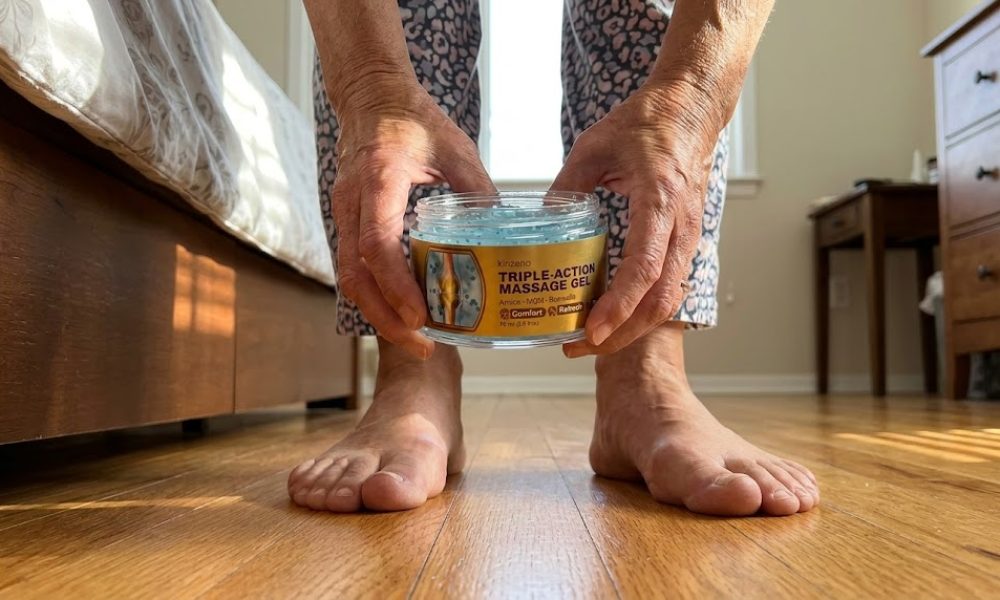
The product was called Kinzeno
Triple-Action Massage Gel.
Theo turned the laptop toward me, holding it like he’d found gold. “Read this.”
I rolled my eyes. “Another gel? I’ve tried half the pharmacy.”
“Not another gel,” he said. “Read how it works.”
So I read it. Twice. For the first time in years, something made practical sense.
The First Day Felt Different
I didn’t expect much — I’d been let down too many times. But Theo made me promise: two weeks,
twice a day, no shortcuts.
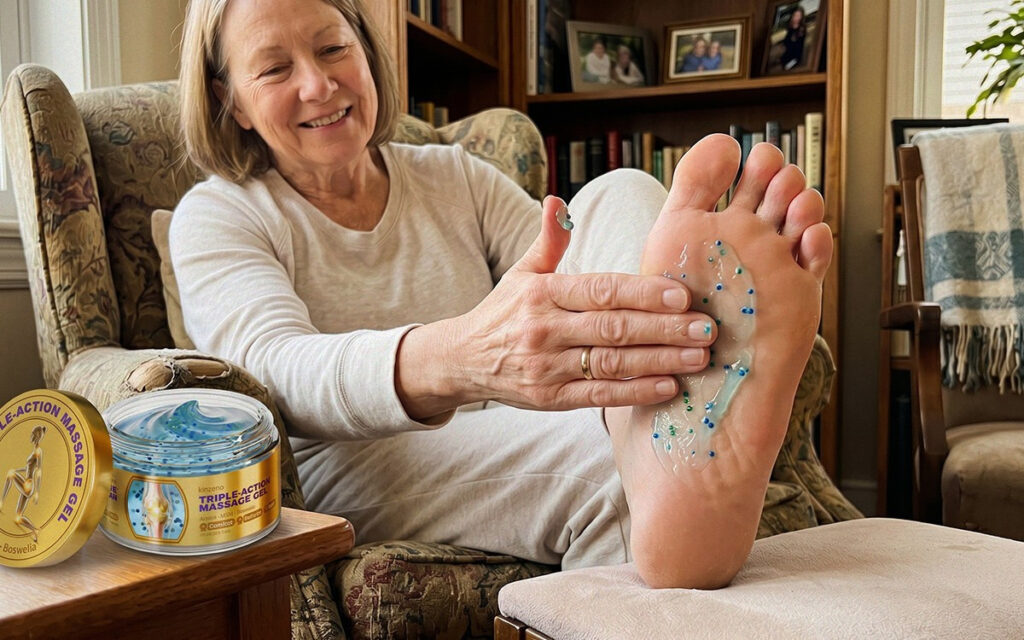
I unscrewed the lid, bracing for a harsh chemical reek. It wasn’t there. It smelled clean and
light, almost like eucalyptus and cool water, with a soft, whipped-foam texture.
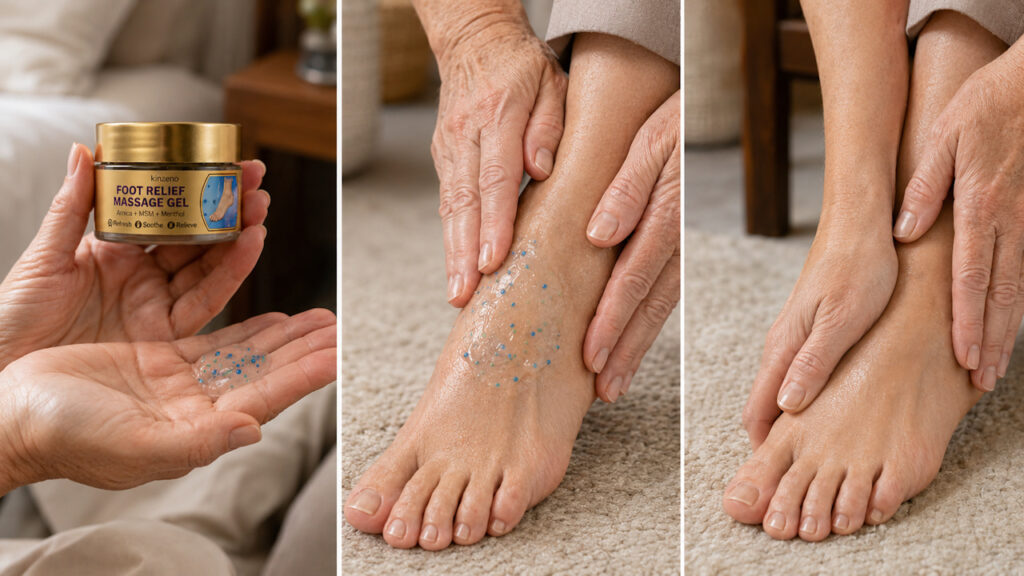
I massaged a small amount into the soles and arches. A cool feeling spread across them — not
a harsh icy blast, more like cool water settling slowly between the nerves. I waited for the
usual buzzing to fight back.
Then I stood up and took three slow steps across the room.
No dramatic miracle. But that first stab I always braced for? Softer. And for me, that was
enough to keep going.
Theo whispered, “You just walked across the room without wincing.”
That was day one.
My 30-Day Journey, Written Like A
Diary
After Day 1:
I set both feet down dreading the floor and waited for the fire. It came softer — less like a
stovetop, more like warm sand. For the first time in ages, I started the day without
bracing.
After 1 Week:
A week in, I slept in my own bed and woke at sunrise surprised, because the 3 a.m. jolts
hadn’t come. I stood at the counter making breakfast without shifting foot to foot. And
without the heavy tablets, my head felt clear in the mornings again.
After 2 Weeks:
I walked the full market without scouting for a bench, then knelt in the garden a few days
later and pulled weeds for half an hour before standing up on my own. My feet felt used, not
attacked. I sat on the back step afterward and quietly cried. Of course Theo saw.
After 30 Days:
Sofia came to visit. She held her arms up to me at the bottom of the stairs. I didn’t
hesitate. I bent down, scooped her up, and stood there feeling the solid floor beneath my
feet — steady, present, trusting my own balance. Theo took a photo. It’s the first one in
years where my smile reaches my eyes.
Why Kinzeno Finally Made Sense To Me
I brought the jar to my next appointment. The specialist didn’t promise me anything — she
reminded me every body is different and to keep up sensible habits. But she said the
approach made sense as part of a daily comfort routine, because it was built around the
depth problem she’d described.
In plain English: when your feet have been trapped in a cycle of discomfort for years, the
problem isn’t one moment of burning. That deep discomfort keeps you tense and still; less
movement winds your muscles tighter; tighter feet make you dread the next step. Kinzeno helped me interrupt that
cycle with a routine simple enough to keep.
The 3-Phase Micro-Bubble Comfort System works in stages as you massage it in:
- Phase 1 — Soothe. As you rub it in, the micro-bubbles spread and create a clean,
cooling sensation that helps take the edge off those busy first-second signals — exactly
when I used to brace for the burn.
- Phase 2 — Ease. As the bubbles soften, the gel absorbs without a greasy layer,
carrying Magnesium and MSM — ingredients often used in topical comfort formulas for
tired, over-worked feet and calves.
- Phase 3 — Support. Once absorbed, ingredients like Mannitol, Boswellia, Arnica
and a B-vitamin complex stay part of the routine, helping keep things feeling calm for
hours.
Not one magic application. A routine I could actually keep, morning and night.
Real People, Real Stories
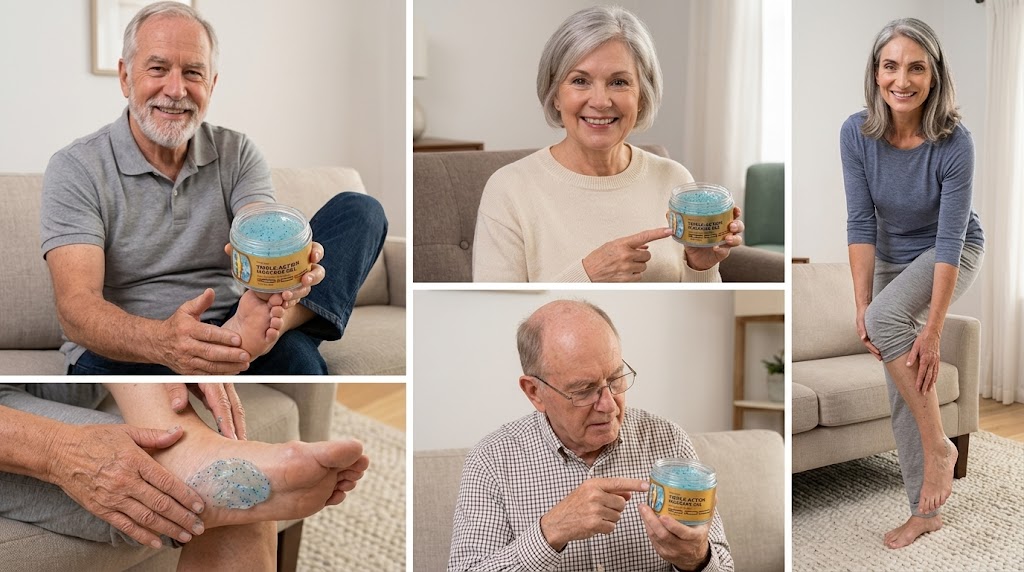
After I shared my story, I heard from others — and it wasn’t only burning soles like mine.
“My toes used to buzz the second I peeled my shoes off, and pacing the hallway was the
only thing that seemed to settle them. A few weeks into the routine and my evenings feel
calmer. Most nights I can sit and read again instead of wandering the house waiting for
my feet to quiet down.”
Robert M. 
“The night cramps were my own private nightmare — that deep calf lock-up that yanks you
out of sleep. I started rubbing this into my calves and feet before bed, and since then
I’ve had stretches of full nights I hadn’t seen in years. Waking up rested instead of
bracing has changed the whole next day.”
Jenny F.
“What surprised me most was the mornings. That first stab when my feet hit the floor used
to set the tone for the day — I’d sit on the edge of the bed working up the nerve to
stand. These days I mostly just… stand up. I keep waiting for the old dread to come
back, but morning after morning it’s been gentler.”
Lena P.
The Offer That Made It Simple For Us
Theo paid full price for that first jar. Worth every cent — but I’d like you to pay less.
Think about what people pour into burning feet over the years: repeat specialist visits,
ongoing co-pays, inserts and creams that fade fast, heavier options that cost a small
fortune and aren’t a sure thing. Kinzeno costs a small fraction of a
single specialist visit.
Right now, there’s a special reader offer — up to 70% off through this link. Plus:
 Fast worldwide shipping
60-day money-back guarantee —
use the whole jar, send it back if it doesn’t work for you
Third-party tested
ingredients
Free bonus jar on the
multi-jar bundle
One Thing Before You Click
Because each batch is produced in small, carefully layered runs, availability can vary
between production cycles. When a batch runs low, the reader price tends to go with it.
I don’t say that to push you. I say it because I waited years to find this — years of
dreading the floor, years of 3 a.m. jolts, years of sitting awake in a chair. Don’t wait
years.
Don’t wait until your feet give out at an awkward moment — on a staircase, on an
escalator, holding someone you love.
Theo's Final Words To You
Last night we walked down to the water after dinner, the way we used to. Theo watched me
stroll ahead and called out:
“I forgot what it looked like to watch you just… walk. I’m so happy to have my wife back.”
That’s what Kinzeno gave us. Not
youth. Not perfection. Just the feeling that I could stand, walk, and live in my own body
again.
If burning, tingling feet have been stealing your mornings, your sleep, your walks — the
guarantee makes the decision simple. Either it becomes a routine that helps, or you send it
back and you’re out nothing.
Don’t let burning feet steal another day from you.
Update: Kinzeno is made in small batches, so availability and the reader offer can
change between production runs. If the offer is still visible when you check, it’s worth
grabbing while it’s there.